Mapping Sequence Dependencies in Multi-Table Poker Tournaments on Digital Networks
Written by Eden Zimmermann · Nov 1, 2026
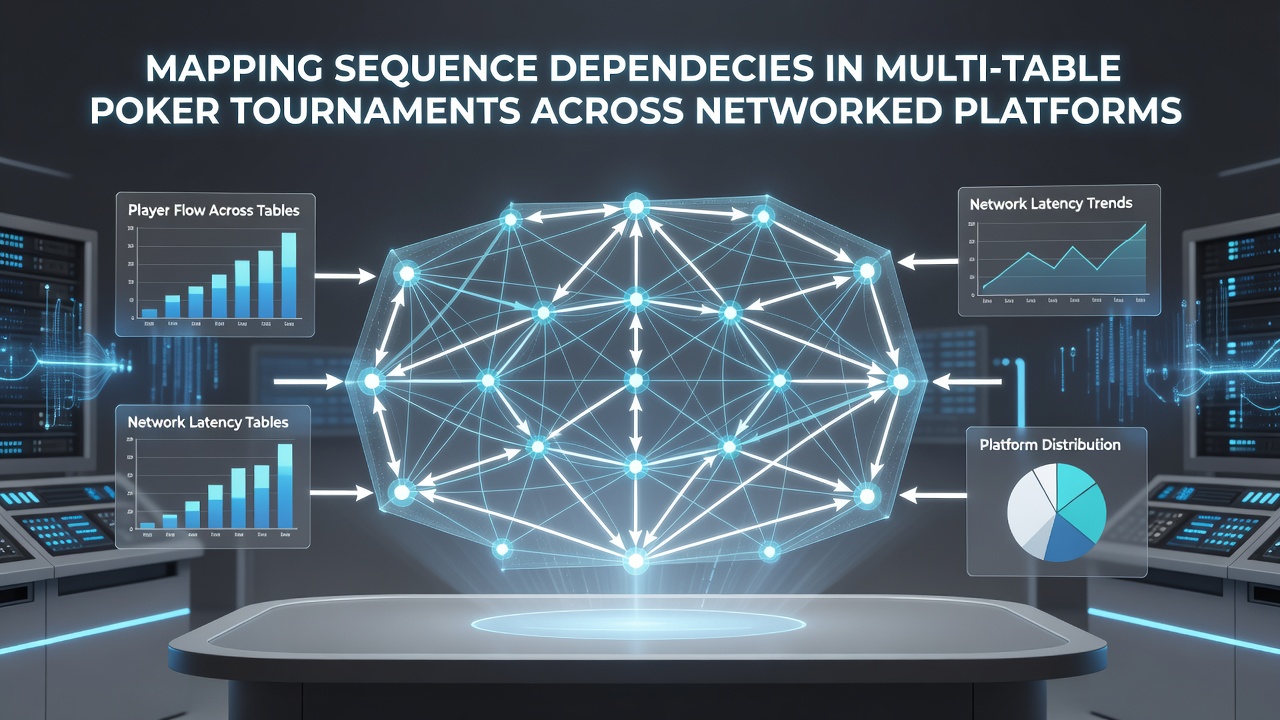
Mapping Sequence Dependencies in Multi-Table Poker Tournaments on Digital Networks
Sequence dependencies in multi-table poker tournaments arise when actions on one table influence available decisions and outcomes on others through shared player stacks, blind structures, and payout ladders that connect across networked platforms. Researchers at institutions focused on game theory and computational analysis have documented how these inter-table links create chains of cause and effect that standard single-table models overlook. Data from large-scale tournament servers shows that players managing multiple entries experience altered risk profiles once early eliminations shift the overall field size and prize distribution.
Core Components of Sequence Dependencies
Every multi-table event generates a web of dependencies that begins with registration timing and extends through bubble stages and final table formations. Observers note that a player’s decision to fold or raise on table A can alter the effective stack depth on table B when both entries belong to the same competitor and the payout structure rewards survival over chip accumulation. Studies of tournament logs reveal that these effects compound when platforms synchronize blind levels across hundreds of simultaneous tables, creating measurable correlations between early exits and late-stage survival rates.
Data Collection Methods Across Platforms
Operators collect timestamped action logs, stack sizes, and table assignments that feed into dependency mapping algorithms. These systems track how one player’s elimination on a secondary table changes the average stack and blind pressure felt by the same competitor’s primary entry. Figures from major online poker networks indicate that dependency mapping improves prediction accuracy for final table appearances by identifying clusters of correlated outcomes that appear when multiple tables reach critical stages simultaneously.
November 2026 brought expanded API access for approved researchers, allowing finer-grained analysis of cross-table timing without exposing individual player identities. This development enabled teams to isolate sequences where a single player’s bust-out on one table triggered measurable shifts in aggression levels among remaining competitors on connected tables.
Platform Architecture and Its Influence on Dependencies
Networked platforms differ in how they assign tables, synchronize blind increases, and manage player re-entries. Some systems randomize seating while others balance tables by stack depth, each choice altering the frequency and strength of sequence dependencies. Evidence from server telemetry shows that platforms using dynamic table balancing reduce certain dependency clusters, whereas static assignments preserve longer chains that link early table outcomes to final payouts.
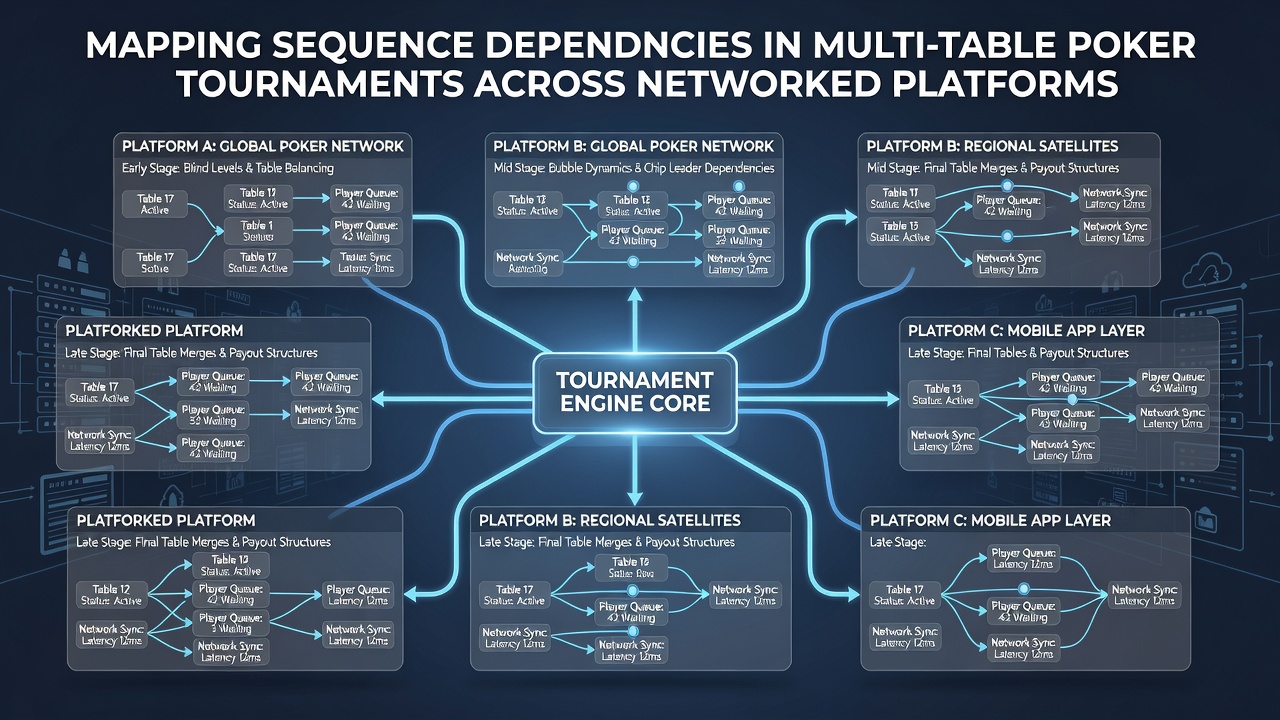
Analysts apply graph theory to represent tables as nodes and dependency strength as weighted edges. When a player holds entries on two nodes, the edge weight increases because stack decisions on one table directly affect the survival probability of the other entry. One study released by the University of Alberta’s poker research group demonstrated that these weighted graphs can predict the probability of multiple final-table appearances with greater precision than independent table models.
Practical Applications in Tournament Operations
Tournament directors and platform engineers use dependency maps to adjust starting times, re-entry windows, and payout structures. Adjusting blind levels on secondary tables when primary tables reach the money bubble has been shown to moderate extreme dependency spikes. Industry reports from the European Gaming and Betting Association highlight how operators in regulated markets employ these maps to maintain game integrity while meeting player protection requirements.
Software tools now visualize real-time dependency strength so that floor staff can anticipate situations where a single player’s elimination on one table could trigger mass all-in confrontations on others. These visualizations rely on live data streams rather than post-event analysis, allowing interventions that keep tournament flow consistent across the network.
Conclusion
Mapping sequence dependencies provides a structured way to understand how actions on individual tables interact within larger networked tournaments. Continued refinement of data collection and graph-based modeling supports more accurate forecasting of player outcomes and platform performance. As November 2026 updates expand access to anonymized logs, researchers and operators gain additional capacity to refine these models and improve both competitive balance and operational efficiency across multi-table events.